Oil film protection layer: Is pre-shave oil a waste of money or the key to smooth shaving?

Table of Contents
In the wet shaving community, the debate about its “necessity” never ceases. If you’re someone who’s just switched from a multi-blade manual razor to a traditional safety razor, you’ve probably heard countless discussions about blade selection and the stinging sensation of aftershave. But there’s one step that often hangs between “myth” and “redundancy”: pre-shave oil.
Many people expect a ritualistic and incredibly smooth shaving experience when they first pick up the heavy safety razor. However, the reality is often different: while the blades are sharp, the skin feels dry and chafed, and annoying red spots are even left on the chin and neck.
At this point, if you post for help on a forum, experienced users will usually give you two suggestions: one is to practice your knife-holding angle, and the other is to get a bottle of pre-shave oil.
So, is this oil film a “scam” invented by businesses to empty your wallet, or a secret weapon to increase shaving smoothness? As an observer who has been in this industry for ten years, I want to take you through the marketing bubble and re-examine this little bottle of oil from the perspective of skin physiology and physical friction.

Unveiling the “hydrophobic barrier”: Why isn’t foam enough?
First, we need to dispel a common misconception: many people believe that as long as their shaving soap lathers up thick enough, the protection will be sufficient.
Indeed, high-quality shaving soaps can provide excellent cushioning, but their main ingredient is, after all, surfactant, and its core principle is “hydrophilic.” When you use a safety razor, the metal blade is in direct contact with your skin. If your skin is dry or your beard is extremely coarse, the moisture in the foam alone is sometimes insufficient to completely eliminate friction at the microscopic level.
Now it’s time for pre-shave oil to make its appearance.
Its working principle is not simply “lubrication,” but rather the creation of a “hydrophobic barrier.” When you apply pre-shave oil after wetting your face with warm water, the oil locks in moisture on the skin’s surface (hydration) while filling in tiny bumps and unevenness in the stratum corneum. This oil film is like waxing a floor—when a sharp safety razor blade glides across it, it “glides” on the oil film, rather than “scraping” your epidermal cells.
This mechanism is crucial for beard softening products. Oils adhere to the hair roots more persistently than water, softening the keratin and significantly reducing resistance during cutting.

Who is the true target audience for pre-shave oil?
Let’s be honest: not everyone who uses a safety razor needs to use pre-shave oil. If you have rubbery skin, a sparse beard, and excessive sebum production, you can skip this step entirely.
However, for the following two groups of people, it is almost a necessity:
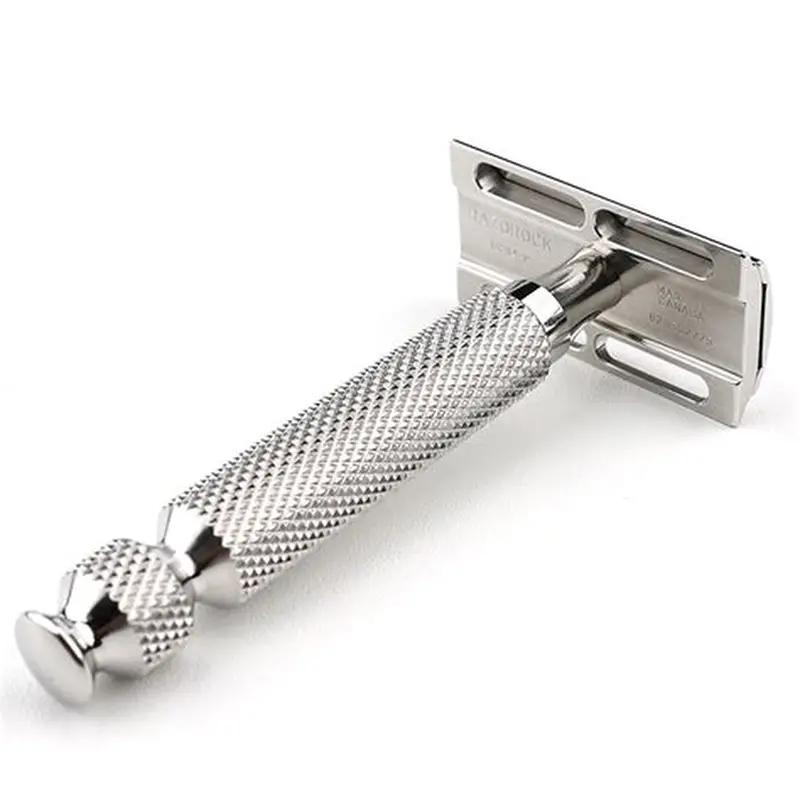
Safety Razor Beginners: When you haven’t fully mastered the muscle memory of the 30-degree angle, your hand movements are often inconsistent in terms of pressure. The extra slickness provided by the pre-shave oil greatly improves the margin of error and prevents scratches caused by excessive pressure.
Dry or sensitive skin: Shaving itself is a physical exfoliation process. For dry skin users, shaving soap may remove too much oil. Pre-shave oil actually acts as a sacrificial layer, protecting your already fragile sebum film.
Shaving Oil Recommendation and Selection Logic
When you decide to try it, you’ll find a wide variety of products on the market. Here’s a little-known secret in the industry: not all oils that claim to be “lubricating” are suitable for use on your face.
When looking for shaving oil recommendations, be sure to avoid cheap products that contain large amounts of mineral oil or silicone oil. While they may be slippery, they can clog pores, are difficult to clean, and can build up stubborn sludge on your safety razor head.
High-quality pre-shave oil typically consists of two components:
- Carrier oils: such as castor oil, jojoba oil, or grapeseed oil.
- Essential oils: provide fragrance and antibacterial properties, such as sandalwood, tea tree, or peppermint.
If you’re looking for a product that truly increases shaving smoothness, pay attention to the first two ingredients. Castor oil provides cushioning due to its high viscosity, while jojoba oil offers absorption and a smooth feel due to its properties similar to human sebum.
DIY Pre-shave Oil Recipe Practical Guide
As a seasoned skincare enthusiast, what I truly advocate is not buying expensive brand-name products, but rather doing it yourself. This not only saves you a lot of money but also allows you to precisely control the feel of your skin, like an alchemist.
Here’s a classic DIY pre-shave oil recipe, suitable for most skin types:
Basic formula (suitable for normal/dry skin):
- 20% Castor Oil: This is the core ingredient; it is very viscous and provides excellent cushioning protection.
- 40% Grapeseed Oil: Light in texture, used to dilute castor oil and prevent clogged pores.
- 40% Jojoba Oil: Excellent penetration, mimicking natural sebum.
Preparation steps:
- Prepare a 30 ml or 60 ml dark glass dropper bottle.
- Pour in the base oil as described above in the specified proportions.
- Add 5-10 drops of your favorite essential oil (such as cedarwood or lavender).
- Tighten the cap and shake vigorously to mix thoroughly.
If you have oily skin, you can reduce the proportion of castor oil to 10% and increase the proportion of grapeseed oil. This formula can be used not only as a beard softening product but also as a daily beard care oil.

Correct way to use Pre-shave Oil
Many people find pre-shave oil ineffective, often because they’re using it incorrectly. The most common mistake is using too much. If your face is covered in oil, the safety razor’s blades will become clogged with the oil, resulting in an incomplete shave.
Here are the golden rules for using pre-shave oil:
- Applying heat is a prerequisite: first wash your face with hot water, or apply a hot towel to your face for 30 seconds. This step is to open the pores and allow the beard to absorb moisture.
- in small amounts, multiple times: Put 3-5 drops (you really only need that much!) of oil into your palm.
- Press, don’t rub: After warming your hands by rubbing them together, press the oil into your skin and beard roots against the direction of beard growth. Spend an extra minute massaging; this is crucial for softening the beard.
- Don’t wash it off: Apply shaving foam directly onto the oil film. You’ll find that the foam and oil mix to form a super-lathered, creamy mixture.
- Start shaving: Pick up your safety razor and enjoy the thrill of the blades gliding across the ice.
Back to the essence of shaving
Ultimately, pre-shave oil isn’t a magic potion; it can’t fix a bad shave. But for safety razor users who crave the ultimate experience or suffer from shaving irritation, it’s certainly an important piece of the puzzle towards “Baby Butt Smooth” (BBS).
It’s not just a layer of oil; it’s an attitude towards life—a willingness to spend an extra minute preparing for even a 10% improvement in experience. Next time you stand in front of the mirror, try adding a little bit of oil under that layer of foam and experience the wonderful moment when physical friction disappears.
FAQ
Q1: Will pre-shave oil clog my safety razor?
If you’re using high-quality plant oil (such as jojoba oil) and in a moderate amount (a few drops each time), it usually won’t clog your safety razor. During shaving, simply rinse the head frequently with hot water. If you notice a sticky substance buildup between the blades, it’s likely because you’re using a product with too much mineral oil or applying too much.
Q2: Can I use beard oil as pre-shave oil?
That’s a great question. While their ingredients are similar, they’re designed for different purposes. Beard oil is typically designed to be absorbed by the hair and has a lighter texture, while pre-shave oil (especially those containing castor oil) is designed to be thicker and stay on the skin’s surface to form a physical barrier. Although they can be mixed, dedicated pre-shave oils are better at increasing the glide feel of safety razors.
Q3: Do I need to use pre-shave oil when using an electric shaver?
Normally not. This article focuses on use with wet shaving tools (such as the safety razor). Electric shavers typically require a dry environment to work efficiently; grease can actually increase resistance and damage the motor. However, there are “powdered” or volatile preshaves specifically designed for electric shavers, which are a completely different product category from the grease we are discussing.