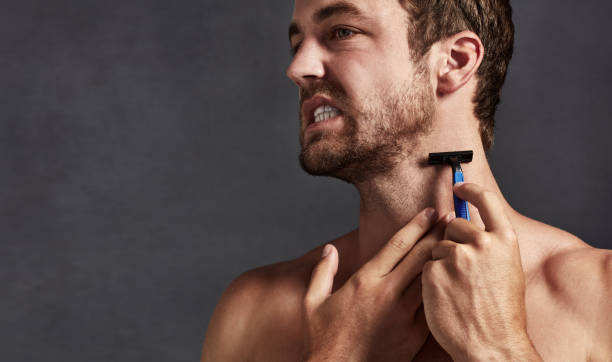
A bathroom plastic reduction revolution: How can safety razors reduce the burden on the planet?

Table of Contents
Standing in front of the bathroom mirror, take a look down at the trash can in the corner. Besides used dental floss, cotton swabs, and empty shampoo bottles, the most conspicuous item is often that brightly colored, complexly structured plastic object—the razor head you just threw away.
According to a staggering statistic from the U.S. Environmental Protection Agency (EPA), more than 2 billion disposable razors end up in landfills every year in the United States alone. If these plastics were laid end to end, they would circle the Earth several times over. And in the hundreds of years it takes for them to decompose, microplastics would have already seeped into the soil and oceans.
We are used to “convenience,” but rarely calculate the ecological costs behind it.
In this global wave of the zero-waste lifestyle, an ancient tool born more than 100 years ago is returning to the public eye. The return of the safety razor is not just an aesthetic revival of retro trends but also a silent revolution against the “use and discard” culture.
The Curse of Composite Materials: Why Can’t Ordinary Cutting Tips Be Recycled?
You might ask, “Isn’t plastic recyclable? Can’t I just throw the old blade into the recycling bin?”
Unfortunately, the answer is no.
Modern multi-layered blade systems (cartridge razors) are a typical example of “over-engineered” products. In order to achieve so-called smoothness, manufacturers tightly fuse stainless steel blades, plastic housings, rubber anti-slip strips, and lubricating strips (usually containing polyethylene glycol) together.
In the waste recycling industry, such mixed materials that are difficult to separate are called “monsters.” Because the cost of separating metals and plastics far exceeds the value of the recycled materials themselves, most recycling centers simply discard them and send them to landfills.
This is the first core advantage of the safety razor: the purity of its materials.
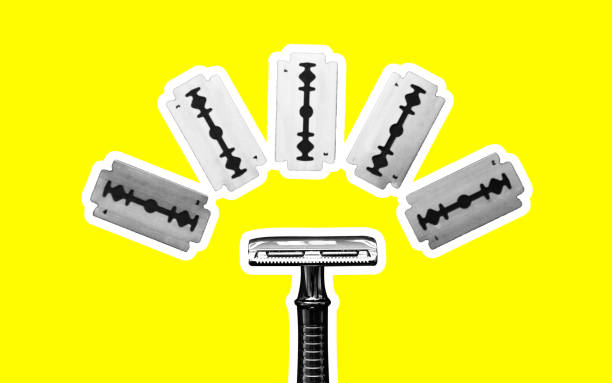
A standard safety razor is typically made of brass, stainless steel, or zinc alloy. Even its consumable—the double-edged blade—is 100% pure steel. There’s no plastic casing, no rubber strips. This means that at the end of its long lifespan (if it does break), it can be recycled as a whole, melted down, and recast endlessly.
For environmentalists committed to reducing plastic waste, this “single material” design logic is the gold standard for achieving closed-loop recycling.

The Triumph of Long-Termism: From “Consumer Goods” to “Assets”
The Zero Waste Lifestyle is not just recycling but also “refusing” and “reducing.”
The trap of modern consumerism lies in “planned obsolescence.” You’ll find that the plastic razors you buy in the supermarket are smooth to use at first, but after a few uses, the lubricant strip breaks, and the blades become clogged with stubble and dead skin that you can’t wash out. You’re forced to throw it away and buy a new one. This is a designed, endless cycle of consumption.
Safety Razor, on the other hand, represents a completely opposite philosophy: buy once, use for a lifetime.
A well-made, eco-friendly razor, if accidentally broken, can almost be passed down to your next generation. It’s not only durable but also easy to clean. When you unscrew the head, the open design allows all the stubble and foam to be instantly washed away by the water flow, leaving bacteria nowhere to hide.
From an economic perspective, this is also a victory.
Multi-layer cutter head: $3 – $5 per head on average.
Double-edged blades: $0.10 – $0.50 per blade on average.
high-quality,While the initial investment in a high-quality Safety Razor is significant, the subsequent operating costs are virtually negligible. This “anti-consumerism” characteristic is precisely the essence of sustainable living products—ending the dependence on cheap consumables by purchasing high-quality durable goods.
Blade Bank: How to safely dispose of discarded blades?
—youMany beginners who want to try zero-waste bathroom essentials are most concerned about what to do with discarded razor blades. “Such sharp blades, you can’t just throw them directly into the trash, can you?”
,Absolutely not. Simply discarding exposed blades poses a significant risk of cuts to waste disposal workers. At Zero Waste Lifestyle , we have a dedicated solution called Blade Bank.
This is a metal container that only accepts water and doesn’t allow it to leave. You can buy a ready-made Blade Bank (usually made of sheet metal), or you can make one yourself (DIY):
- Find an empty tin can (such as a soup can or a luncheon meat can).
- Make a narrow slit at the top just big enough to fit the blade.
- Insert a blunt blade into it.
- When the jar is full (which can take years), use a hammer to flatten and seal the opening, or wrap it with tape.
- RECYCLING.”Label the cans “SHARPS – METAL RECYCLING”.
and closed-loopAt this point, you can safely drop the entire can into the metal recycling bin. During the steel mill’s smelting process, the can and the blades inside will be melted together by the high temperatures. The entire process is safe, closed-loop, and results in zero landfill.

Say Goodbye to the Pink Tax: Gender Equality in the Face of Environmental Protection
In the world of plastic razors, if you want to buy a razor with a handle designed for women, you usually have to pay what’s called the “pink tax”—just because it’s pink or has a slightly bent handle, it costs 20% more than the men’s version.
the safety razorBut Safety Razor is a natural egalitarian.
.A classic metal razor, whether used for shaving or removing hair from legs and underarms, operates on the same physical principles. More and more women are choosing the safety razor as their first item in their zero-waste lifestyle .
It not only eliminates anxiety about reducing plastic waste , but also brings unexpected skincare benefits. The single blade makes fewer cuts on the skin, leaving no residue, and thus reduces the “over-exfoliation” and ingrown hair problems common with multi-blade razors.
Weight in hand
When you first pick up an all-metal…the safety razor will surprise you with its weight. This substantial feel contrasts sharply with those flimsy plastic products.
This weight seems to be a reminder that every consumption choice carries weight.
Every tiny change we make in the bathroom may seem insignificant, but over a lifetime, it represents the enormous gap between thousands of plastic blades and zero plastic waste. Safety Razor hasn’t changed the world, but it has changed the way you interact with the material world—from unconscious waste to conscious appreciation.
This plastic reduction revolution in the bathroom doesn’t require you to hold up banners and protest in the streets; all you need to do is pick up your knife rack in a different way tomorrow morning.
FAQ (Frequently Asked Questions)
Q1: Are safety razor blades really more environmentally friendly than multi-layer blades?
Absolutely. First, the safety razor’s blades are extremely small and made of a single metal, resulting in a very high recyclability. In contrast, multi-layered blades are complex composite materials (metal + plastic + rubber), which are almost impossible to recycle cost-effectively and end up in landfills or incineration, producing microplastics and harmful gases.
Q2: Can I bring a safety razor when traveling by plane?
This needs to be discussed on a case-by-case basis. You can put the handle (the part of the blade) of the safety razor knife in your carry-on bag, but you must remove the blade and put it in your checked baggage. According to the aviation security regulations of most countries, any form of exposed blade is strictly prohibited in carry-on baggage. If you do not want to check it in, it is recommended to carry the handle and purchase the blade locally after arriving at your destination (this is also the advantage of standard double-edged blades being universally applicable).
Q3: As an eco-friendly newbie, I’m worried that the safety razor might scratch me. Is that normal?
This is perfectly normal. It’s a psychological hurdle that all users transitioning from multi-head cutters will experience. As long as you remember two principles: “zero pressure” (let the blade holder cut by its own weight, don’t press down) and “find the angle” (keep the handle at a 30-degree angle to your skin), you’ll find it’s actually very safe. Once you master the technique, you’ll find that this focus on the present moment is itself a mindfulness practice in life.