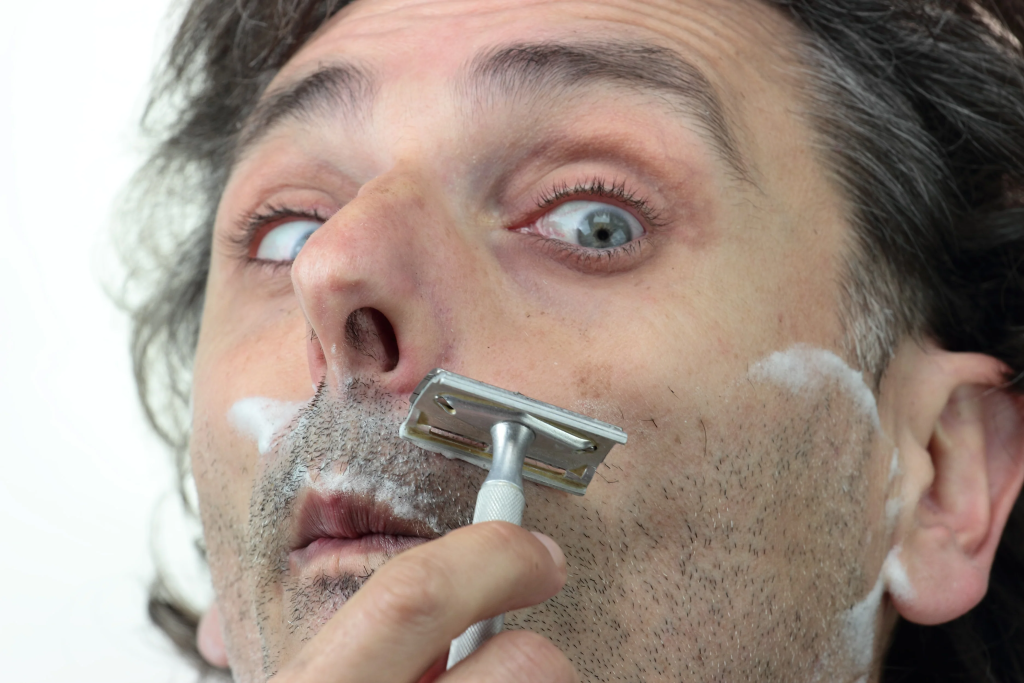
Can you shave even if you have acne? How does the safety razor alleviate the pain of shaving for acne-prone skin?
Table of Contents
For many men suffering from acne, the morning washbasin is more like a battlefield. When you face the red, swollen inflammation in the mirror and the anxiety of how to shave because of acne, that multi-blade razor that claims to be “extremely smooth” is often the culprit that causes skin disaster.
Every razor user with acne-prone skin has experienced this fear: when the blade glides across the skin, it accidentally “shaves off” the top of a raised pimple, causing immediate and profuse bleeding, followed by more serious infections and pigmentation in the days to come. But this doesn’t mean you have to choose between a “face full of stubble” and a “face full of wounds.”
In fact, the return to the traditional safety razor is becoming the ultimate shaving solution for acne-prone skin, recommended by dermatologists and grooming experts.
Why multi-blade shavers are a nightmare for acne-prone skin?
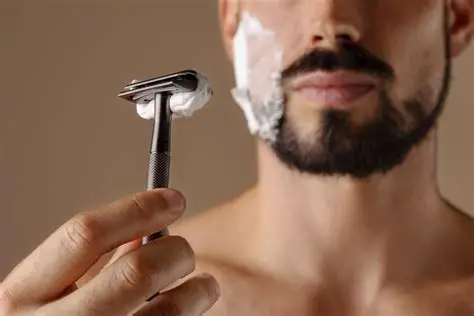
Discussing the advantages of safety razors, we must debunk the marketing lies of modern multi-blade razors. In pursuit of the ultimate “clean shave,” these razors are typically designed with 3 or even 5 blades.
1. Folliculitis caused by retention effect
Multi-blade razors work by “pulling and cutting.” The first layer of blades hooks the hair and pulls it out of the follicle, and subsequent blades cut it before it retracts. This process can easily cause the hair to retract below the skin, forming ingrown hairs, which can worsen acne.
2. A breeding ground for bacteria
The complex crevices of multi-blade razors are extremely difficult to clean thoroughly. Hair clippings, dead skin cells, and residual shaving cream accumulate in the damp spaces between the blades, creating a breeding ground for bacteria. The next time you use this tool that lacks “antibacterial” protection, you are essentially pushing bacteria directly into tiny wounds.
3. Damage from over-exfoliation
Each blade passing through the skin essentially acts as an exfoliation process. For razor users with acne-prone skin that is already inflamed, five blades mean that each shave excessively erodes the damaged skin barrier, causing the inflammation to spread further.
The underlying logic of safety razors in saving acne-prone skin
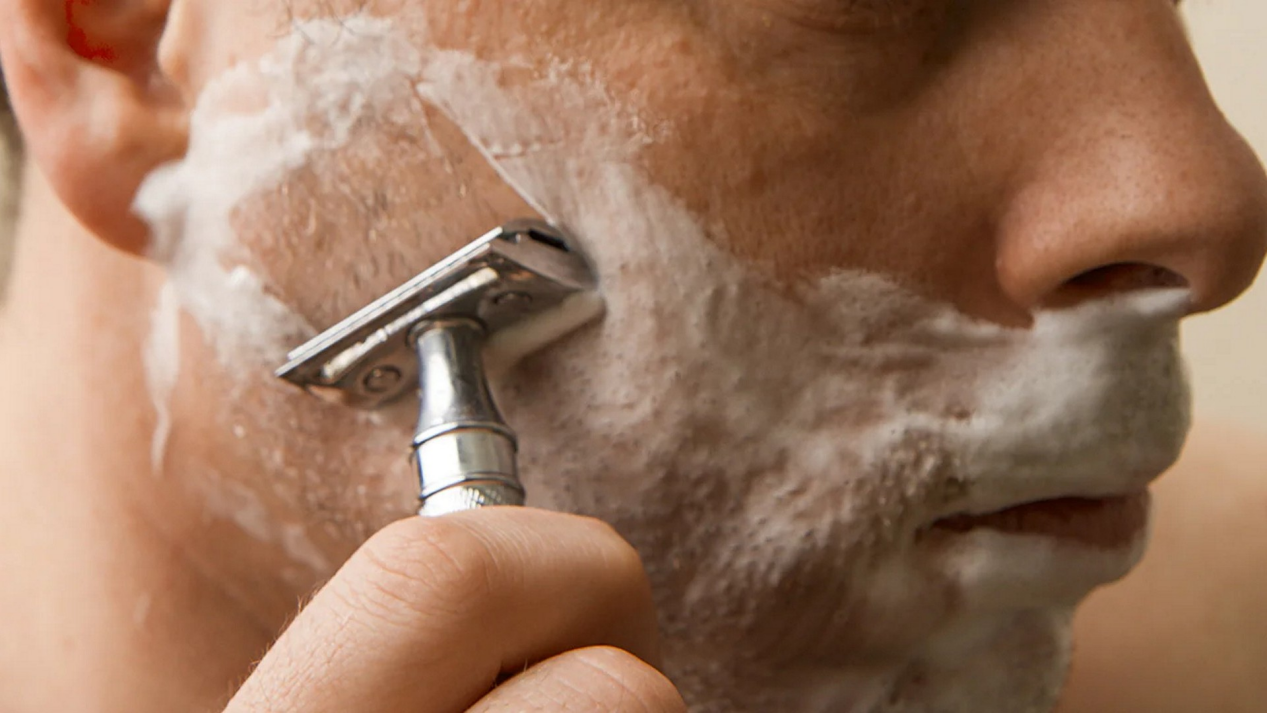
In contrast, the safety razor uses a single-blade design, a “back to basics” design logic that perfectly matches the physiological needs of acne-prone skin.
Reduce friction in a single cut
The safety razor lies in its single-blade design. When you get the angle right, the blade smoothly cuts through the beard without repeatedly rubbing against the delicate skin surface like a multi-blade design. This means that even with uneven skin texture, a single blade makes it easier to achieve a “point-to-point” cut, minimizing the damage caused by “shaving” pimples.
Extreme hygiene standards
The safety razor has a very simple design, typically consisting of a shaving cap, base, and handle. It can be easily disassembled and rinsed after each shave. More importantly, replacing a single blade is extremely inexpensive. For users who value antibacterial razor features, using a brand new, sterile blade every day is far healthier than sticking with a multi-blade head that has become rusty and grime-ridden after a month.
Physical defense: The blessing of alum stone
Using Alum Block after Safety Razor is the gold standard in old-school grooming. Alum’s function lies in its natural astringent and antibacterial properties. It can instantly shrink tiny wounds and block bacteria from entering damaged hair follicles.

Practical Guide to Acne-Prone Skin: How to Safely Get Through the Shaving Period
If your skin is in a breakout phase, blindly and violently scratching will only prolong the healing time. The following is a professional-grade procedure based on safety razors:
Step 1: Softening and Cleaning
Do not dry shave. Pre-cleanse with a facial cleanser containing salicylic acid or tea tree oil. This will not only kill bacteria but also soften the beard.
Step 2: Avoid the red and swollen area
This is the most crucial point. When faced with pustules or cystic pimples, don’t try to “smooth them out.” The safety razor’s weight is supported by the handle, using gravity to guide the blade’s movement, rather than applying pressure. When near the edge of the pimple, control the handle angle to let the blade glide gently over it; even leaving a little stubble is better than letting the pimple break open and become infected after shaving.
Step 3: Cold water to astringe and reduce inflammation
After shaving, rinse your face repeatedly with cold water to close your pores. Then, dampen an alum block and gently apply it to the entire shaved area. You will feel a slight tingling sensation; this is the alum working its astringent and disinfecting properties.
The uses of alum: a “band-aid” for acne-prone skin.
Many beginners overlook the role of alum, but it is indispensable in shaving care for acne-prone skin.
- Immediate hemostasis: If you accidentally scratch a pimple, alum’s strong astringent properties can quickly stop the bleeding.
- Inflammation warning: If you feel a sharp stinging sensation when alum stone is glided over an area, it indicates that the skin in that area is already damaged or is about to develop inflammation. This serves as a reminder to strengthen the follow-up care of that area.
- Secondary sterilization: It can act as a physical barrier to prevent external dust and bacteria from entering the hair follicles that have not yet healed.
From Game Theory to Coexistence
Switching to Safety Razor isn’t just about pursuing a retro ritual; it’s about taking responsibility for your skin. Acne doesn’t mean you’ve lost the right to a clean face; it’s simply a reminder that you need a gentler, more hygienic, and more controllable shaving method.
When you slow down and learn to “talk” to the contours of your skin, you’ll find that shaving is no longer a bloody battle but a healing process.
FAQ
Q1: Can I still use a safety razor if I am using prescription medications (such as tretinoin)?
Using retinoids can make skin extremely thin and dry. In this case, it is recommended to use a safety razor with a high-oil-content shaving cream to increase lubrication. Also, be sure to choose a “mild” razor handle to minimize blade exposure and strictly follow the aftercare instructions using alum.
Q2: My pimple popped after shaving. What should I do in an emergency?
First, rinse off the foam with running water. Then, press the cold-water-soaked alum block against the wound for about 30 seconds, until the bleeding stops. Finally, apply a small amount of non-oily antibiotic ointment or tea tree oil. Remember not to touch the wound repeatedly with your hands to avoid secondary infection.
Q3: Why is the safety razor considered the best antibacterial razor alternative?
While many shavers on the market claim to have “antibacterial coatings,” their actual effectiveness often diminishes rapidly with repeated use. Safety Razor‘s “antibacterial” logic lies in its minimalist design, which makes it easy to clean, and its extremely low blade replacement cost, allowing you to physically ensure that every tool that comes into contact with your skin is sterile.