From Tools to Collectibles: A Beginner’s Guide to Vintage Gillette

Safety Razor from the 1950s: Feeling the weight of the brass and hearing the precise click of the mechanism, you are not just holding a grooming tool but a condensed history of the golden age of industry.
In an era before planned obsolescence dominated manufacturing, every Gillette razor was designed to last a lifetime. Compared to the cheap feel of modern plastic razor handles, the allure of antique razors lies in their mechanical vitality—sharp enough to remain as sharp as ever after half a century.
If you’re tired of the mundane routines of fast-moving consumer goods and want to delve into the cultural logic behind the price of a Gillette Fatboy, this introductory guide will transport you back to the glittering era of brass and nickel plating.
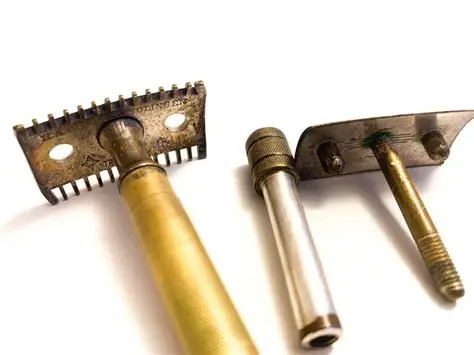
Legends of the Golden Age: Must-Read Gillette Vintage Shaver Models
Between the 1950s and 1970s, the safety razor underwent an evolution from structural simplification to peak functionality. Understanding these key models is the first step in identifying a vintage razor.
Gillette Tech: A Simple Yet Sophisticated Starter
The Tech is one of Gillette’s most produced models in history. It features a classic three-piece construction with no complicated moving parts, making it extremely easy to maintain.
Feel: Very mild, suitable for beginners with sensitive skin.
Key identification points: Post-war tech evolved from triangular grooves to square grooves. Although it’s an entry-level model, its solid nickel plating process allows it to regain its shine after a simple cleaning, even after years of gathering dust in flea markets.
Super Speed: The pinnacle of fast-opening structures
If you enjoy the ceremonial feeling of rotating the bottom handle in movies and having the blade open like butterfly wings, then the Super Speed series is the perfect choice for you.
- Blue Tip: Lightweight and the mildest.
- Red Tip: Heavier, with a larger blade gap, more aggressive, and suitable for hard stubble.
- Flare Tip: A balanced choice, it was a standard feature in American households in the 1950s.
Gillette Fatboy: The “Holy Grail” of Collectors
An antique razor collection is incomplete without discussing the Gillette Fatboy. As Gillette’s first mass-produced adjustable razor, it features a 1-9 speed dial.
Mechanical aesthetics: The extremely thick handle (hence its nickname) provides excellent handling.
Price Trends: Due to its limited production period (1958-1961), the Gillette Fatboy’s price has been steadily rising in recent years. A fully original Fatboy with intact plating has become an investment item in men’s collectors’ cabinets.

Collectors’ Secret Codes: How to Decipher Date Codes
When identifying the model of a vintage Gillette razor, you don’t need to guess its manufacturing date. Gillette used an extremely precise coding system after 1951 (and for some periods before).
The Logic of Letters and Numbers
On the underside of the blade’s base, you’ll find a letter and a number.
- The letters represent the year: for example, “D” represents 1958 and “E” represents 1959.
- The numbers represent quarters: “1” represents the first quarter, and so on.
For example, if you see “E-4” on a Fatboy base, it means it was produced in the fourth quarter of 1959. Mastering this code allows you to spot false claims by sellers on eBay or in physical secondhand stores, ensuring you buy the specific year you’re looking for.
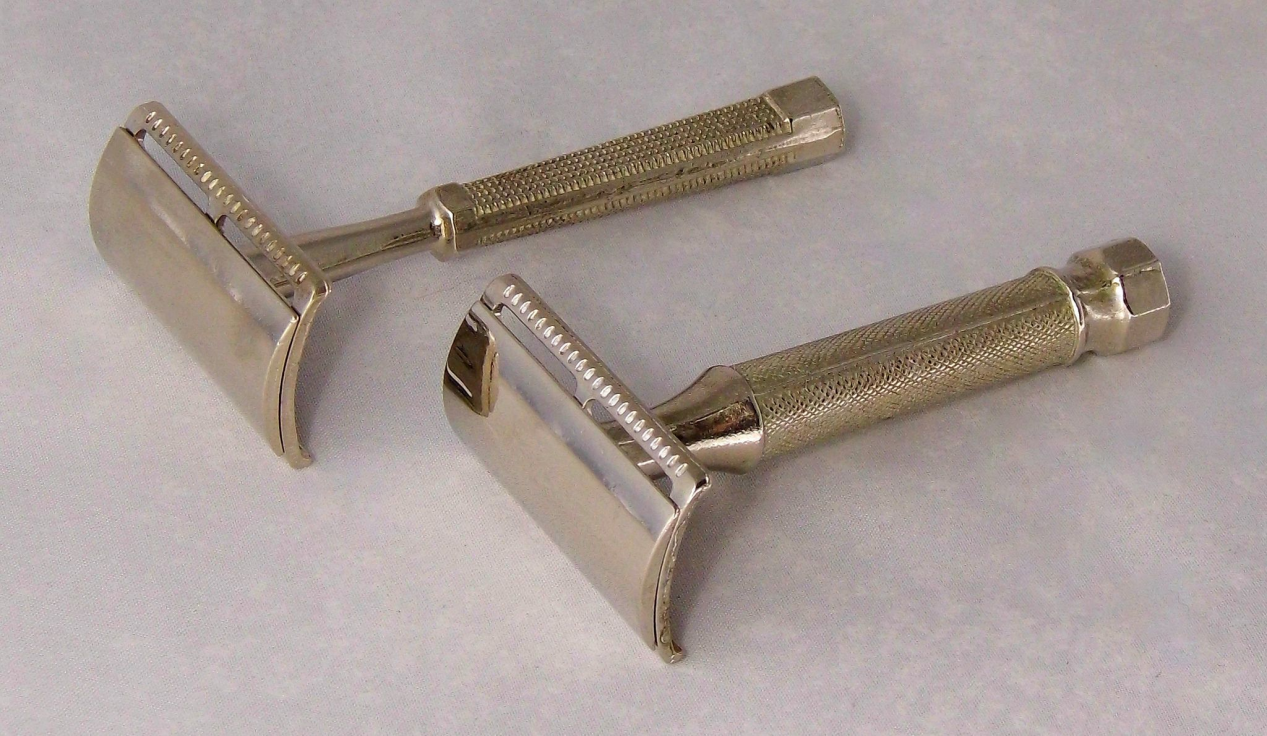
Bargain hunting and renovation: From flea markets to display shelves
You need a discerning eye when buying collectibles with refurbishment potential for used razors.
Key observation point: Plating loss
Most antique safety razors are made of brass plated with nickel or gold.
Brassiness: If you see yellow showing through the silver surface, it means the plating has worn off. While this doesn’t affect usability, it greatly reduces its collectible value.
Mechanical function: Check if the TTO (twist to open) mechanism is smooth and if the blade head is symmetrical when closed. If the blades are unevenly exposed (blade alignment issue), it can only be used as a decorative piece and cannot be used for shaving.
The Art of Cleaning
Don’t be scared off by the grime in antique shops. Most of the time, it’s just soap scum left over from decades ago.
- Soaking: Use dish soap and hot water to soak. Do not use acidic cleaners, as they will damage the nickel plating.
- Scrubbing: Gently brush away the crevices with an old toothbrush.
- Disinfection: Soak in 70% alcohol for 10 minutes.
Grasp the thickness of time
The Safety Razor collection is essentially a return to a philosophy of “slow living.” The ritual of shaving with a 70-year-old Gillette connects the past and the present. It reminds us that true classics don’t die with technological advancements; instead, they become more refined with time.
This is not just a search for brass and steel sheets but also a pilgrimage to men’s grooming culture.
FAQ: Frequently Asked Questions about Gillette Antiques Collection
Q1: Are secondhand antique safety razors hygienic?
A: Completely hygienic. The metal surfaces are thoroughly cleaned and disinfected with alcohol/pasteurization, posing no biological risk. Compared to the complex structure of modern multi-blade shards, the open geometry of antique knife holders makes them extremely easy to clean thoroughly.
Q2: What are the essential differences between Fatboy, Slim, and Super Adjustable?
- A: Fatboy (1958-1961) had a short and thick handle;
- Slim (1961-1968) had a thinner and longer handle, a thinner head, and was easier to shave the philtrum;
- Super Adjustable (also known as Black Beauty, 1968-1980s) had the longest black anodized aluminum handle and a more modern style.
Q3: Why do some older razors not have codes on them?
A: Gillette’s coding rules varied across different periods. For example, serial numbers were used between 1921 and 1930, while some models from the 1930s and 1940s (Depression Era) eliminated serial numbers and date codes to control costs. These early open-comb models can usually be dated by examining the base pattern and handle design.